Springtime shots from a trip to the Teotihuacan Pyramids, about 30 miles outside of Mexico City, along with some thoughts. If had a bucket list, this would have been on it, so I’ve checked that box.
Teotihuacan was the largest urban center in Mesomerica – it existed about 1000 years before the Aztecs, with a population of approximately 100,000 people, spread over 8 square miles and segmented into various neighborhoods. The pyramids were built during n the 1st and 7th centuries, as ritual platforms and temples to the gods, originally painted bright red. Today it’s a UNESCO World Heritage site, where millions of people come to tour the Pyramid of the Sun, Pyramid of the Moon, Temple of Quetzalcoatl, and the Avenue of the Dead. The names come from the Aztecs, who discovered the complex when they rolled into “town.”
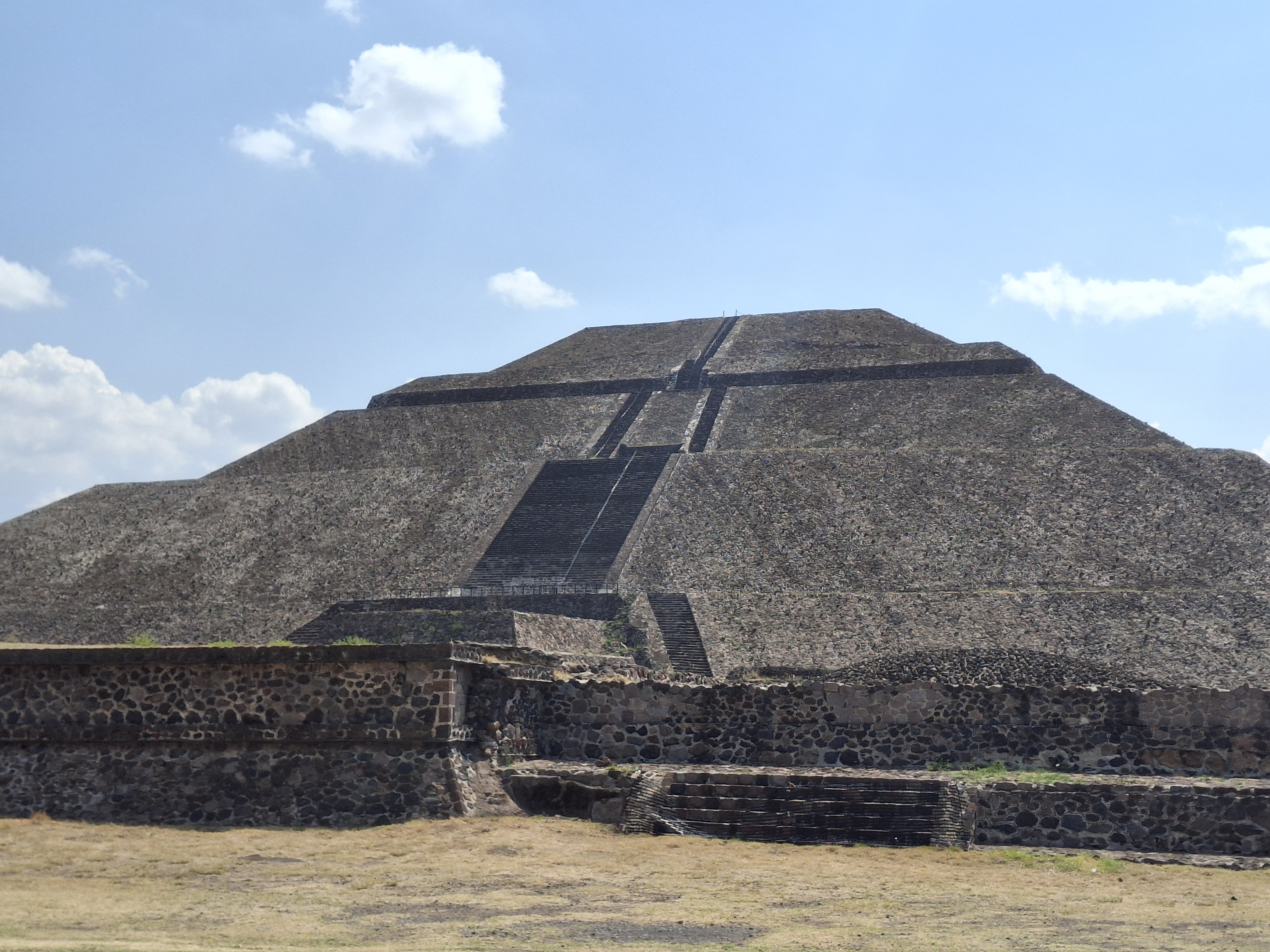
The Pyramid of the Sun is one of the largest pre-Columbian structures in the Americas, 66 meters tall, 230 meters on each side; visitors used to be able to climb it, but no longer. The Pyramid of the Moon comes in next, at 43 meters tall; I am afraid of heights, but I gutted it up the very narrow steps, head down. Standing on top, I could see far into the distance and imagine the breadth of the ancient city, spotting sites marked for digging in the distance.
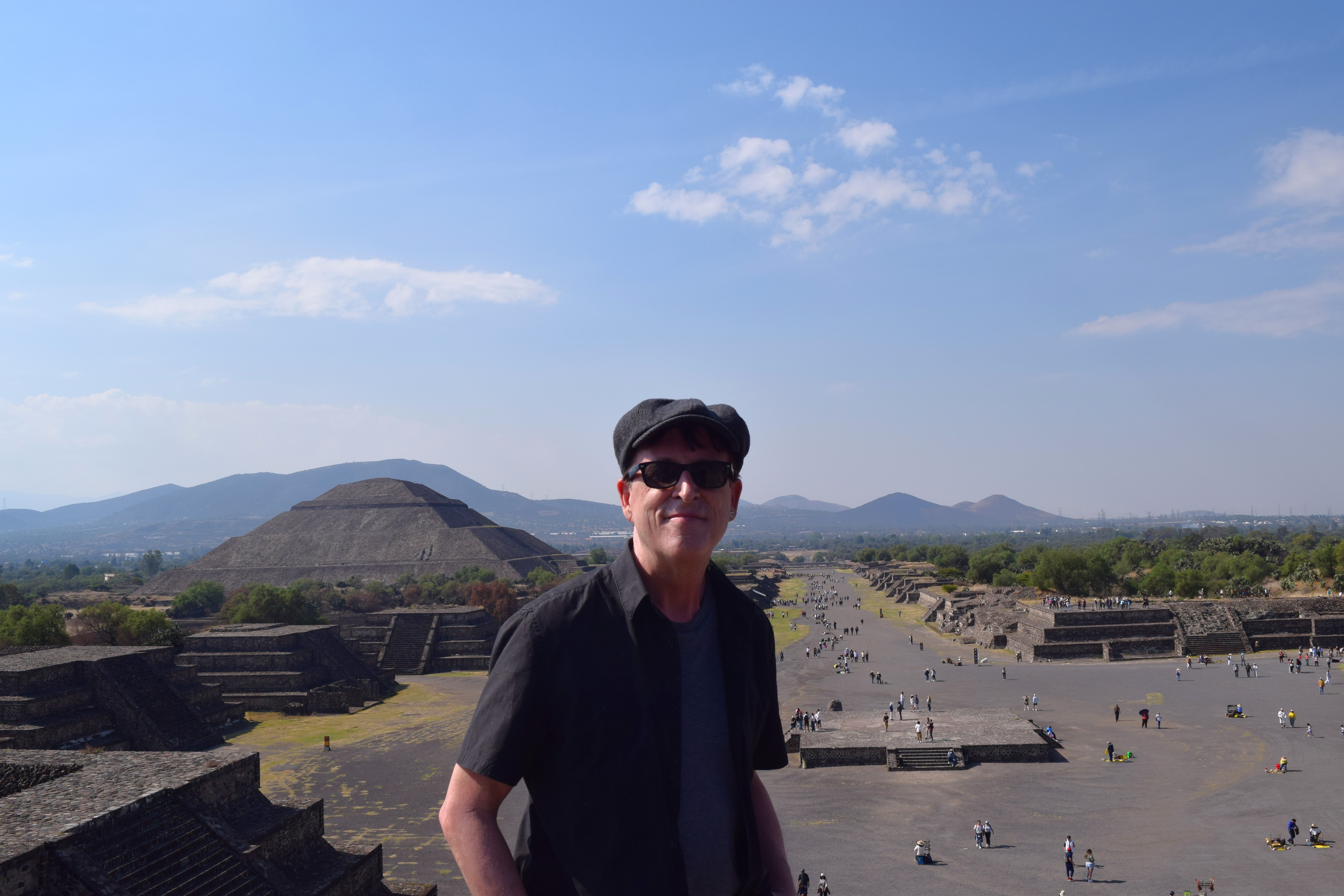
From there, it was a considerable walk to the Temple of Quetzalcoatl, and I chatted with a couple from the tour group on the way and learned they split their time between Berlin and Paris; he an electronica artist originally from Manchester, UK visiting CDMX for a performance; she a photographer and visual designer, both dressed in black. Nice folks, I’d been to all those places and played Manchester a fair amount back in the day, so we had plenty to connect on – places we’d been, music, art, politics, history (of course).
Anyway, the Temple of Quetzalcoatl is “smaller” but very interesting with its carvings and sculptures; in the early 2000s, an underground chamber or tunnel was discovered underneath, utilizing radar to pinpoint and begin digging, as it was blocked with boulders. Archeologists have found and catalogued 75,000 artifacts underground, along with tunnels of mercury lakes and pyrite walls In 2021, folks even discovered an 1800-year-old bouquet of flowers dated to between roughly 1 and 200 C.E. the first time such a well-preserved plant matter has been discovered at Teotihuacan. That blows my mind.
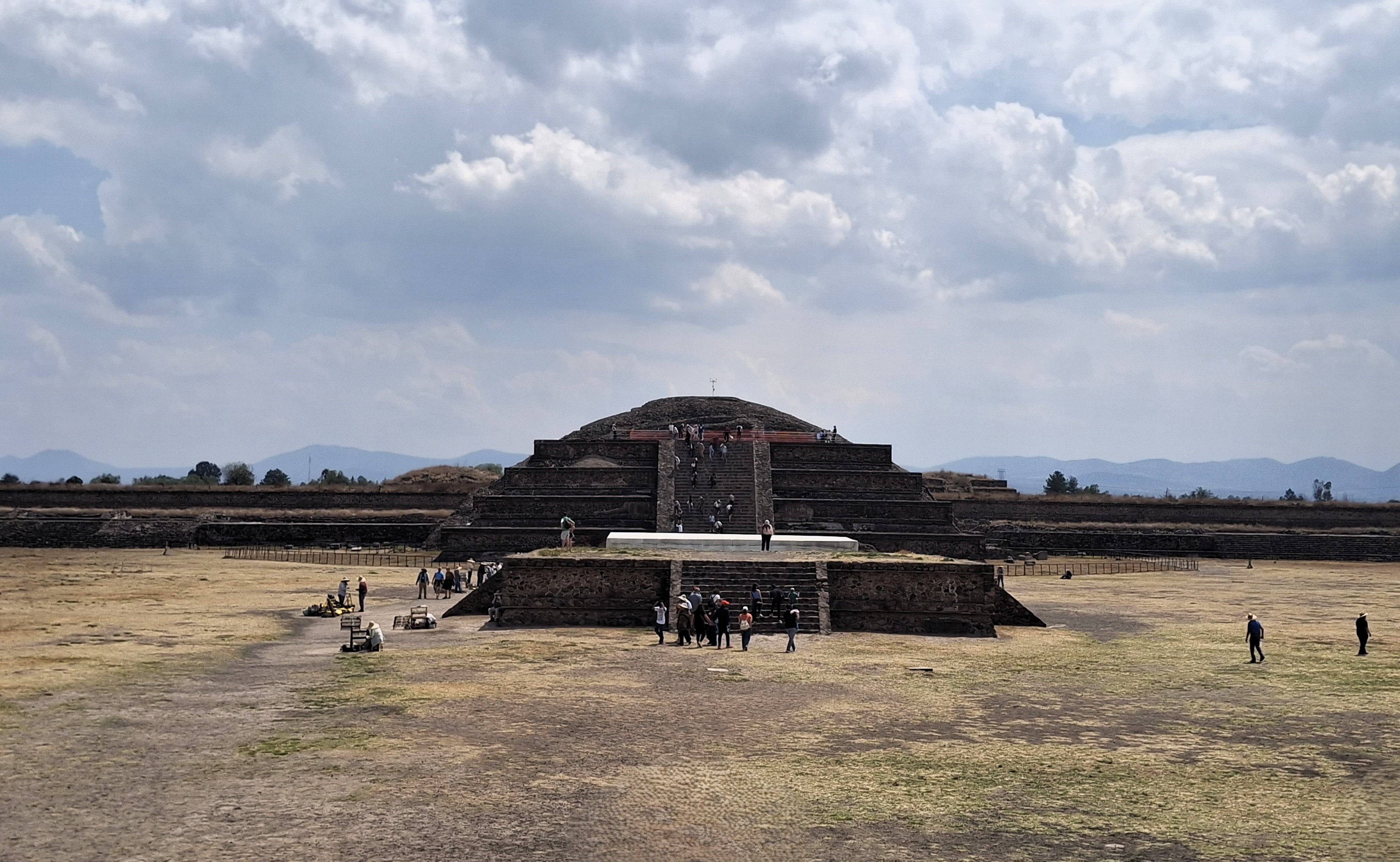
Not that much is known about the people who lived there and of course, visiting ancient sites such as this, puts everything in perspective, underscoring how such a relatively sophisticated and thriving culture can come and go, with the blink of an eye.

