Sometimes I’ll be putting some pix up on the socials and I start writing and I wind up with a mini essay of sorts. This is one of those times; harkening back to December holidays, when I met my son and his girlfriend in Chicago for the week, he saw his mom’s parents, we saw my brother, and we hung out, revisiting old memories and making new ones.
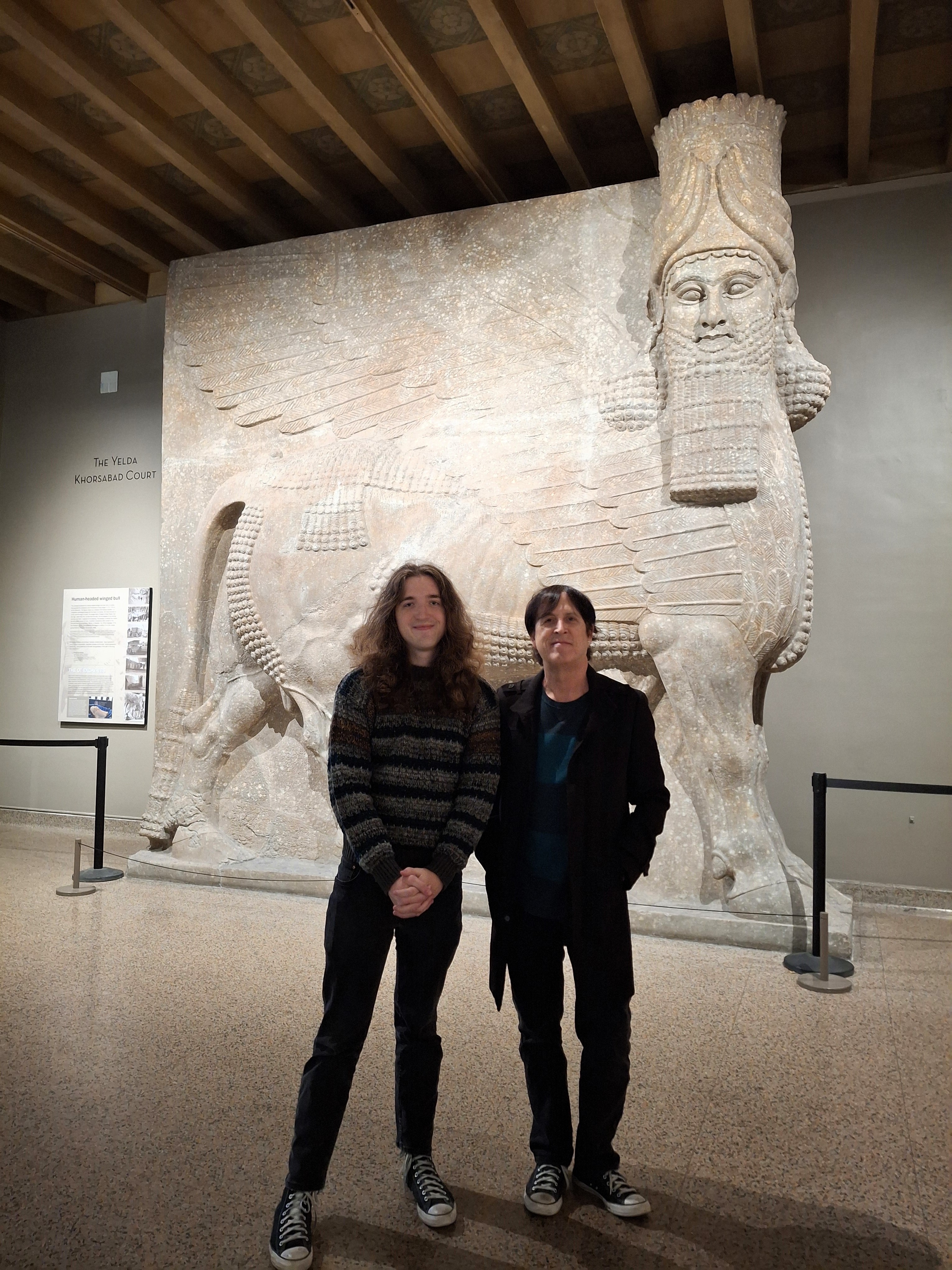
My son Jude is a fan of ancient history, his girlfriend’s field is archeology, and he did some research and noticed there was this really cool, free exhibit at U of Chicago, “Megiddo: A City Unearthed, a Past Imagined.” As the press release says – “at the crossroads of West Asia, Egypt, and the Mediterranean, Megiddo endured for millennia as a nexus of power and cultural exchange.” Jude and I have both been to the British Museum and the Louvre to see those collections, but who knew that U of Chicago collection of antiquities is nearly as vast? Not I, despite being a hometown guy; I’d taken my son to the Robie House and Museum of Science and Industry, but this one was news to me. Apparently, the University has been excavating at Megiddo for a hundred years, beginning with an Antiquities Ordinance which permitted the division of finds between the Institute for the Study of Ancient Cultures Museum and the British government in Palestine.
Because this began as a socials post, I anticipated responses about how imperialists often pillaged these sacred sites, which is certainly true. Much of the Louvre = Napoleon. However, there are the scholars and historians and today, antiquities are being returned all the time because there is more cooperation among museums, if not governments. The University actually has facilities on the Nile in Egypt. And, while native cultures should take priority in protecting their histories, it is good that people all over the world can see exactly how advanced these civilizations were, how ethnocentric we are, and how every community, state, or country, is on some level, ephemeral. Btw, Megiddo is purportedly the site of Armageddon.
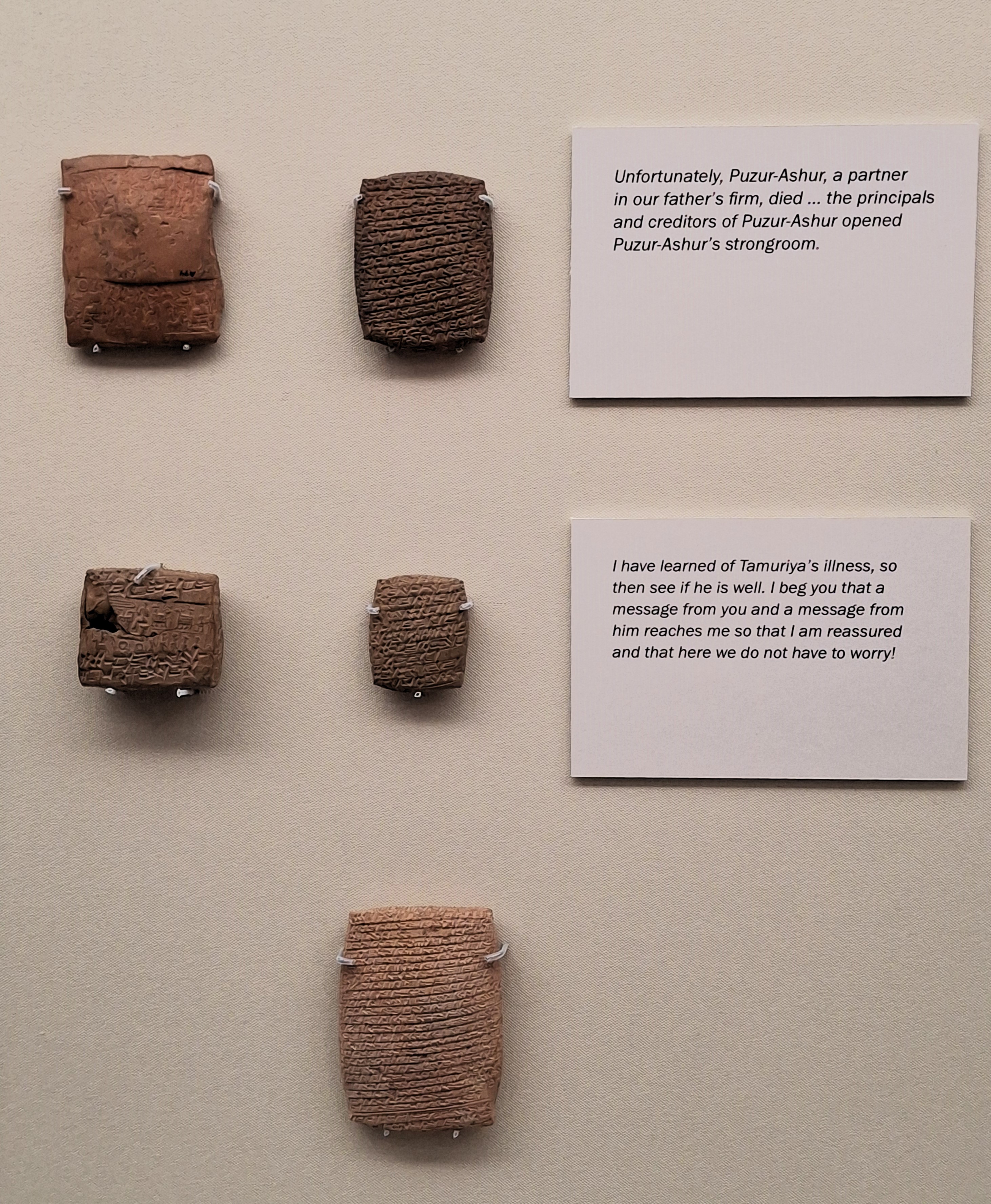
Anyway, it is fascinating to see how the Sumerians lived; they invented writing in 3,300 B.C., one of humanity’s greatest achievements. Something like 15,000 letters have been found to date, people discussing their businesses, life at school, land deeds and lawsuits – or a simple plea asking a friend to write so they would know that person is okay. You know, typical life stuff in day-to-day Mesopotamia. It’s taken scholars 100 years to fully decipher the language written in these tablets. There were interesting pieces in the exhibit on Baghdad and Egypt, as well.
After the exhibit we stopped at a favorite record store (Dusty Groove) and then out to Illumination at one of our happy places, Morton Arboretum, capped off by deep dish pizza. Every day is a good day, really, but some days are perfect.
 Doug Hoekstra